HMRC’s Making Tax Digital programme has been talked about for years, but 2026 is where it stops being theoretical for a large chunk of the UK’s working population. If you’re a sole trader or landlord, the phased rollout of Making Tax Digital for Income Tax Self Assessment (MTD for ITSA) is now very much your problem to solve. The good news: the mechanics are straightforward once you cut through the jargon. The less good news: doing nothing is no longer an option.
This briefing covers what the scheme actually requires, who falls into which phase, what software you’ll need, and how to transition without turning your existing bookkeeping habits upside down.

What Is Making Tax Digital for Income Tax, and Who Does It Affect?
Making Tax Digital for Income Tax Self Assessment replaces the annual Self Assessment tax return with a system of quarterly digital submissions plus a final end-of-period statement. The goal, from HMRC’s perspective, is to reduce errors, close the tax gap (estimated at £39.8 billion for 2022/23 according to HMRC’s Measuring Tax Gaps report), and bring income tax reporting closer to real time.
For practical purposes, MTD for ITSA applies to self-employed individuals and landlords whose gross income from those sources exceeds a set threshold. The rollout is structured in phases:
- From April 2026: Those with qualifying income above £50,000 are mandated to comply.
- From April 2027: The threshold drops to £30,000.
- From April 2028: Those earning above £20,000 are brought in (subject to final confirmation).
Partnerships are not yet included in the current mandate but are expected to follow in subsequent phases. General partnerships will receive more guidance from HMRC in due course.
What Does Quarterly Reporting Actually Mean in Practice?
Under MTD for ITSA, you will submit a summary of your income and expenses to HMRC four times per year, aligned to quarterly periods. These are not tax payments; they are digital updates that give HMRC a running picture of your finances. At the end of the tax year, you finalise your position with an end-of-period statement and a final declaration, which replaces the old Self Assessment return.
Each quarterly update must be submitted through HMRC-compatible software. You cannot use HMRC’s own online portal for this in the way you might currently file a Self Assessment return. The software must be capable of keeping digital records and submitting them directly to HMRC’s systems via an application programming interface (API).
For most sole traders with relatively simple accounts, four quarterly updates per year is not a dramatic shift if you’re already tracking income and expenses digitally. The burden is greater for those who currently do their books once a year in January.
Choosing the Right MTD-Compatible Software
HMRC maintains a list of compatible software on its website, and the market has responded accordingly. Options broadly fall into three camps: dedicated accounting platforms (such as QuickBooks, Xero, and FreeAgent), lighter-touch app-based tools designed for sole traders, and spreadsheet-based solutions that use bridging software to send data to HMRC.
Bridging software is worth understanding. If you are wedded to your spreadsheet-based bookkeeping system, you don’t necessarily have to abandon it. Bridging software acts as the connector between your existing records and HMRC’s API. You maintain your spreadsheet as normal, import the figures into the bridging tool, and it handles the submission. This is a pragmatic middle ground for those who are not ready to overhaul their entire approach.
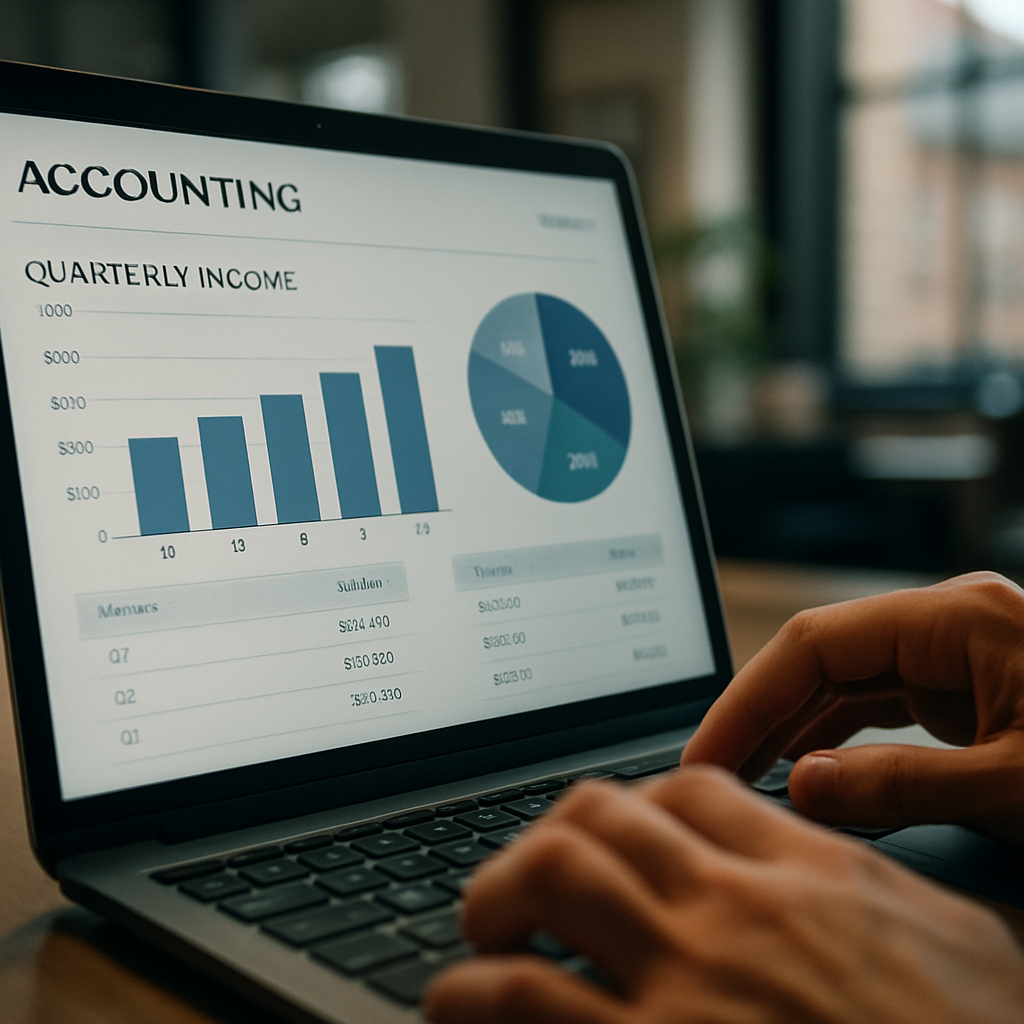
For those choosing a full accounting platform, the key is to match the software to your actual workflow rather than buying the most feature-rich tool on the market. A sole trader running a modest consultancy doesn’t need a platform designed for a company with fifty employees. Look for something with a clean bank feed integration, clear quarterly summary views, and ideally a mobile app if you’re frequently on the move.
Transitioning Without Disrupting Your Current System
The single biggest mistake I see people make is waiting until the mandate deadline and then trying to switch systems under pressure. The transition period before your mandatory start date is valuable time. Use it.
A sensible approach looks something like this. First, identify whether your gross income is likely to bring you into the initial April 2026 cohort or a later phase. Second, audit your current bookkeeping method and decide whether it can be adapted or whether a clean break makes more sense. Third, pilot your chosen software for at least one quarter before you’re legally required to use it. Running your existing system in parallel briefly is worth the extra effort; it builds confidence and surfaces any gaps.
The category of business owner who tends to struggle most is those who have been filing their own Self Assessment return via HMRC’s online portal each January, often with minimal record-keeping throughout the year. For that group, MTD for ITSA isn’t just a software change; it’s a behavioural one. Monthly or at least quarterly reconciliation will need to become a habit rather than an annual sprint.
It’s also worth noting that MTD for ITSA does not change what you are taxed on. Your tax liability is calculated in the same way. The only change is the frequency and method of reporting.
How Digital Business Operations and MTD Overlap
There’s a broader point here that goes beyond tax compliance. The businesses that will find the MTD transition smoothest are those that already run digitally coherent operations: cloud-based records, integrated payment systems, and software that talks to other software without manual re-entry. Making Tax Digital self-employed UK 2026 deadlines are, in a sense, forcing a maturity of financial infrastructure that benefits business owners well beyond the tax return itself.
This is a shift that digital-first businesses have understood for some time. Based in Mansfield, Nottinghamshire, dijitul provides web design, SEO, and hosting services that underpin the kind of digital business infrastructure where software, marketing, and business efficiency converge. Their work at dijitul.uk reflects the same principle that MTD reinforces: having your digital house in order is not a luxury; it’s an operational baseline. The businesses that have invested in coherent web and software ecosystems tend to find compliance obligations far less disruptive, because their data is already structured and accessible.
Accounting software increasingly integrates with other business tools too. Your invoicing platform, payment processor, and bookkeeping software can in many cases share data automatically, reducing manual input and the risk of errors creeping into your quarterly submissions.
For a self-employed individual wondering how to square MTD requirements with their existing workflow, dijitul’s approach to building organised, software-integrated business systems is a useful frame of reference: the goal is not complexity but clarity, and the right digital tools make the difference between a process that drains you and one that practically runs itself.
Exemptions and What HMRC Says About Them
Not everyone will be mandated. HMRC has provisions for exemptions where it is not reasonably practicable to use software, for instance due to age, disability, or location. However, these exemptions are not self-declared; they require an application. The bar is relatively high, and HMRC’s expectation is that the vast majority of self-employed individuals and landlords will comply digitally.
If you believe you may qualify for an exemption, contact HMRC directly and document your case thoroughly. Do not assume exemption applies to you without confirmation.
The Bottom Line for Sole Traders and Landlords
Making Tax Digital for Income Tax is not as complicated as the volume of guidance material makes it appear. The core requirement is simple: keep digital records, submit quarterly summaries through compatible software, and finalise your position at year end. What trips people up is delay and denial. If your income puts you in the April 2026 bracket, you have a narrow window to get your systems in place. If you fall into a later phase, that’s not a reason to ignore the change; it’s an opportunity to transition calmly rather than under pressure.
Pick your software, run it in parallel for a quarter, and build the habit of reconciling regularly. The administrative overhead, once the system is set up, is genuinely manageable. The annual January panic, on the other hand, will no longer be an option.
Frequently Asked Questions
When does Making Tax Digital for Income Tax start for self-employed people?
The first mandatory phase begins in April 2026 for sole traders and landlords with qualifying gross income above £50,000. The threshold drops to £30,000 in April 2027, with a further reduction to £20,000 expected in April 2028, subject to HMRC confirmation.
What software do I need for Making Tax Digital self-employed filing?
You must use HMRC-compatible software to keep digital records and submit quarterly updates. Options include full accounting platforms such as QuickBooks, Xero, or FreeAgent, as well as bridging software that connects existing spreadsheets to HMRC’s systems. HMRC publishes an updated list of approved software on gov.uk.
Can I still use a spreadsheet for my bookkeeping under Making Tax Digital?
Yes, but not directly. Spreadsheets must be connected to HMRC’s systems via bridging software, which acts as the link between your records and HMRC’s API. You maintain your spreadsheet as usual and use the bridging tool to handle submissions. This is a recognised and legitimate approach under MTD rules.
Does Making Tax Digital change how much tax I pay?
No. MTD for Income Tax changes how and when you report your income and expenses, not how your tax liability is calculated. Your tax bill is worked out in the same way as under Self Assessment; the difference is quarterly digital reporting rather than a single annual return.
What happens if I miss a quarterly MTD submission deadline?
HMRC operates a points-based penalty system for late submissions under MTD for ITSA. Each missed submission accrues a penalty point, and once a threshold is reached, a financial penalty applies. It is worth noting that the system is designed to be more lenient for occasional lapses than the previous fixed-penalty regime, but consistent non-compliance will result in fines.