
The phrase “passive income” has been doing the rounds for years, often wrapped in motivational nonsense about sipping cocktails while money rolls in. The reality is considerably more grounded. Passive income streams for business owners are real, achievable, and genuinely worth building, but they all require either significant upfront capital, time, or existing business infrastructure. Nothing here is magic. What follows is an honest breakdown of what actually produces results in 2026.

Why Business Owners Are Better Positioned Than Most
If you already run a business, you have structural advantages that most people lack. You understand systems, you likely have an existing customer base, and you have professional credibility in at least one area. These aren’t small things. Many passive income models rely on trust and audience, both of which take years to build from scratch. For a business owner, those assets often already exist. The task is deploying them sensibly.
According to ONS data on UK sector accounts, income from non-employment sources has grown steadily amongst business-owning households over the past decade. That trend hasn’t reversed. If anything, the tooling available in 2026 makes diversified income more accessible than it has ever been.
Digital Products: Front-Loaded Effort, Long-Tail Returns
Selling digital products is probably the most talked-about passive income model, and for good reason. Create something once, sell it repeatedly, with no inventory, no logistics, and no fulfilment headache. The formats that work consistently include templates, toolkits, online courses, and written guides aimed at a professional niche.
The key word is niche. A generic productivity course will struggle. A financial modelling template built specifically for UK-based SaaS founders? That has a defined audience and a genuine use case. Platforms like Gumroad, Teachable, and Kajabi all support UK-based sellers with GBP pricing. Distribution through your existing email list or LinkedIn following keeps your customer acquisition costs low.
The honest caveat: most digital products require ongoing promotion. The “set and forget” version of this model doesn’t really exist. What you get is a product that earns without additional production time, not one that markets itself indefinitely.
Licensing Your Expertise or Intellectual Property
If your business has developed proprietary processes, frameworks, software, or creative assets, licensing is worth examining seriously. This is one of the more underused passive income streams for business owners in the UK, perhaps because it requires proper legal structuring, but the returns can be substantial and genuinely hands-off once agreements are in place.
Licensing works particularly well in sectors like software, professional training, photography, and branded methodology. A management consultancy that has developed a proprietary assessment framework, for instance, could licence that to other consultancies or to corporate HR departments, generating recurring royalty income. The SRA and relevant professional bodies may need to be considered depending on your sector, but a commercial solicitor can structure a clean agreement that protects your IP whilst generating income.
Dividend Investing: Boring, Slow, and Extremely Effective
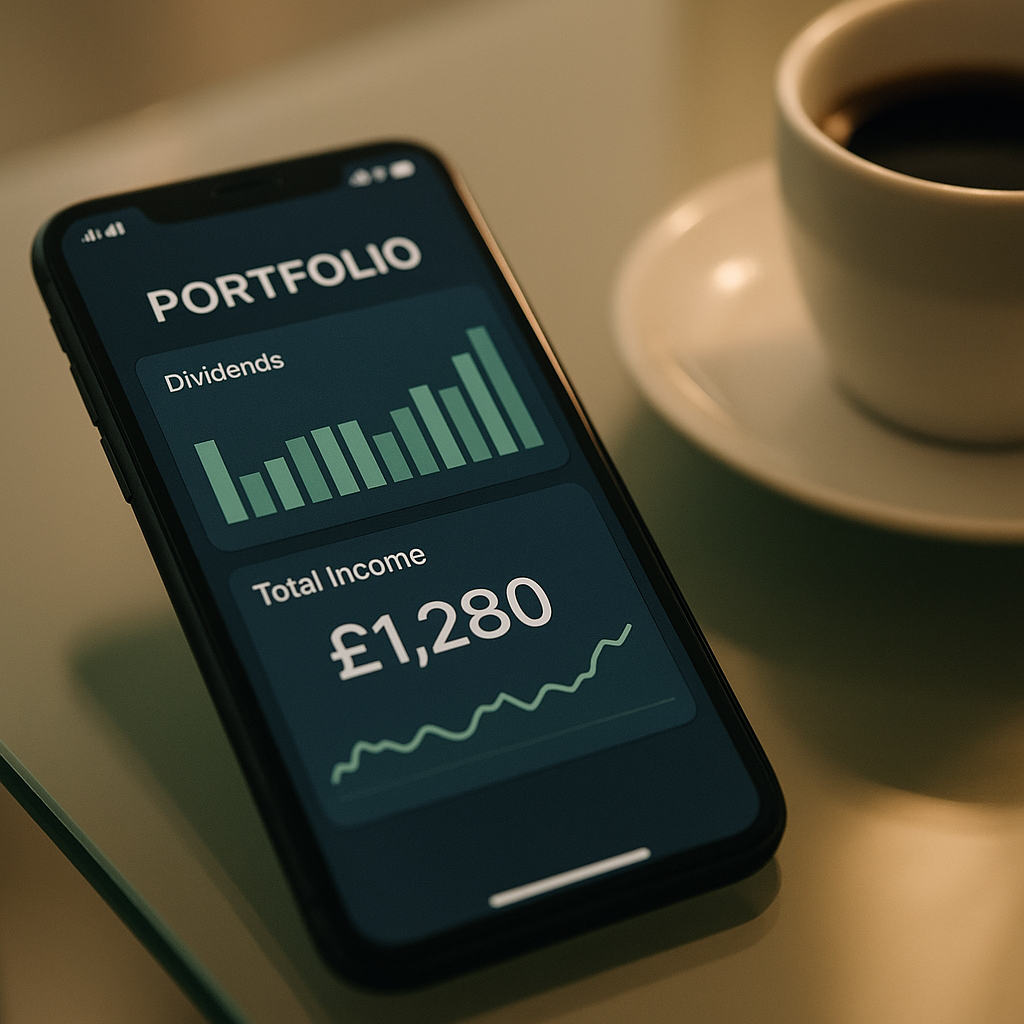
Business owners who generate retained profits have a natural path into dividend investing. Holding dividend-paying equities inside a company pension, a Stocks and Shares ISA, or directly via a trading account produces income that compounds quietly in the background. The FTSE 100 includes a strong cohort of historically reliable dividend payers: utilities, financial institutions, consumer staples. These are not exciting businesses. That is rather the point.
The tax efficiency angle matters here. Dividends received within an ISA are free of both income tax and capital gains tax. The annual ISA allowance in 2026 remains £20,000 per individual. Business owners who pay themselves through dividends already understand the mechanics; extending that thinking to investment income is a logical step.
Realistic expectations are important. A 4% dividend yield on a £100,000 portfolio produces £4,000 per year. That is supplementary income, not a replacement salary. However, compounded over a decade with reinvested dividends, the numbers become genuinely meaningful.
Automated Service Models and White-Label Revenue
This one is specific to business owners rather than individuals. If you run a service business, there are usually components of your offering that can be productised, automated, or white-labelled to generate income without your direct involvement.
A digital agency that builds a proprietary reporting dashboard might white-label that tool to other agencies. A bookkeeping firm might build a self-service client onboarding flow that handles initial scoping without human input, reducing delivery costs whilst maintaining revenue. A marketing consultant might build a membership community with a monthly subscription that delivers value through recorded content and templated resources rather than live time.
None of these models are purely passive from day one. They require thoughtful system design and consistent quality. But they all share one important characteristic: revenue that is no longer directly proportional to your working hours. That decoupling is what passive income actually means in a business context.
Property Income: Still Relevant, But Context-Dependent
Buy-to-let has had a difficult few years in the UK. Changes to mortgage interest relief, stamp duty surcharges on additional properties, and tighter EPC requirements have compressed margins for many landlords. That said, commercial property, rent from equipment or storage, and property held within a SIPP (Self-Invested Personal Pension) still represent viable income streams depending on your capital position and risk tolerance.
The simpler entry point for business owners is commercial property investment through REITs (Real Estate Investment Trusts), which trade on the London Stock Exchange. These offer property income exposure without the management overhead of direct ownership, and they can be held within an ISA for tax efficiency.
Choosing the Right Model for Your Situation
Passive income streams for business owners work best when they align with assets you already possess: expertise, IP, capital, or an audience. Spreading yourself across five different models simultaneously is a reliable way to do none of them well. The more effective approach is to identify one model that fits your current position, build it properly, and layer in a second once the first is genuinely running.
The businesses that sustain multiple income streams over the long term are invariably the ones that treated each stream as a serious project rather than a side experiment. The “passive” part comes later. The work comes first.
Frequently Asked Questions
What are the most realistic passive income streams for business owners in the UK?
The most realistic options include selling digital products (templates, courses, guides), licensing intellectual property, dividend investing via ISAs or company pensions, and automating parts of an existing service business. Each requires upfront investment of time or capital but can generate income with reduced ongoing effort.
How much money do I need to start generating passive income as a business owner?
It varies significantly by model. Digital products can be built for very little upfront cost if you have existing expertise. Dividend investing becomes meaningful at £50,000 or more in invested capital. Licensing arrangements depend on having existing IP or systems worth licencing. The lowest barrier to entry is typically digital products or productised services.
Is passive income taxable in the UK?
Yes, most passive income is taxable. Dividend income above the annual £500 dividend allowance is subject to dividend tax. Rental income is subject to income tax. Capital gains from investments outside an ISA are subject to CGT. Holding income-generating assets inside a Stocks and Shares ISA is one of the most tax-efficient approaches available to UK residents.
How long does it take for passive income to become significant?
Most passive income models take 12 to 36 months before they generate meaningful, reliable income. Digital products need an audience and promotional infrastructure. Dividend portfolios grow through reinvestment over years. Automated service models require system-building before they reduce your direct labour. Treating passive income as a long-term project rather than a quick fix produces much better results.
Can I build passive income while still running my main business?
Yes, and this is the most common approach. Many business owners start by productising knowledge or assets they already have, which requires less additional time than building something from scratch. The key is focusing on one income stream at a time to avoid spreading resources too thinly across multiple unfinished projects.
Leave a Reply